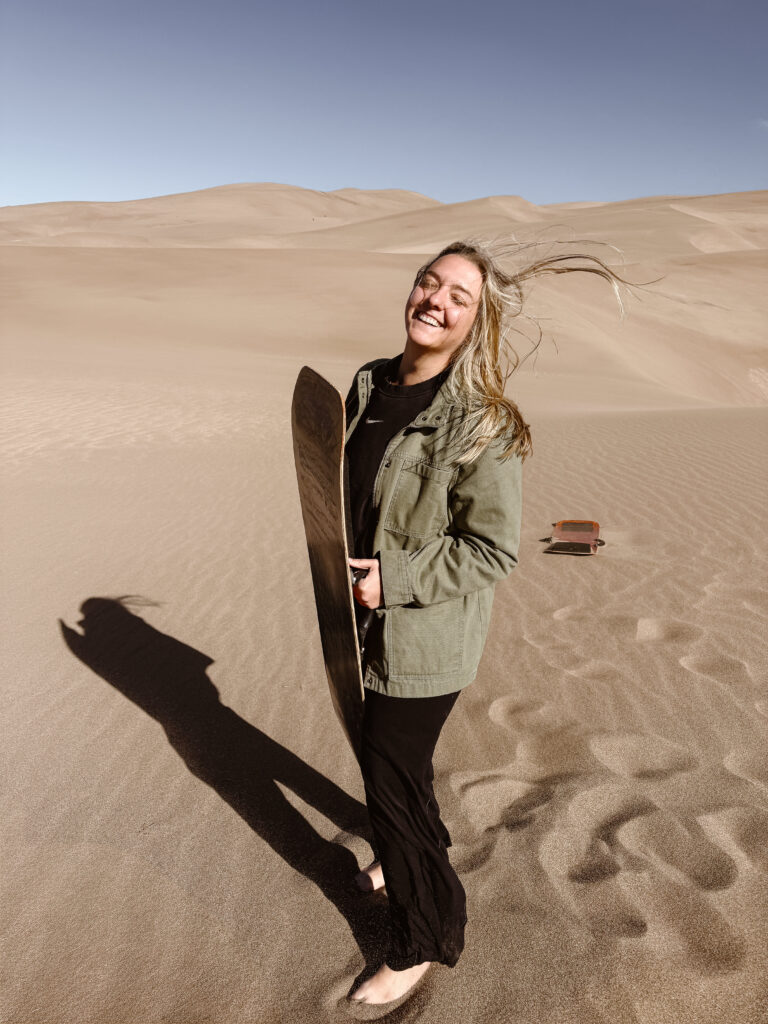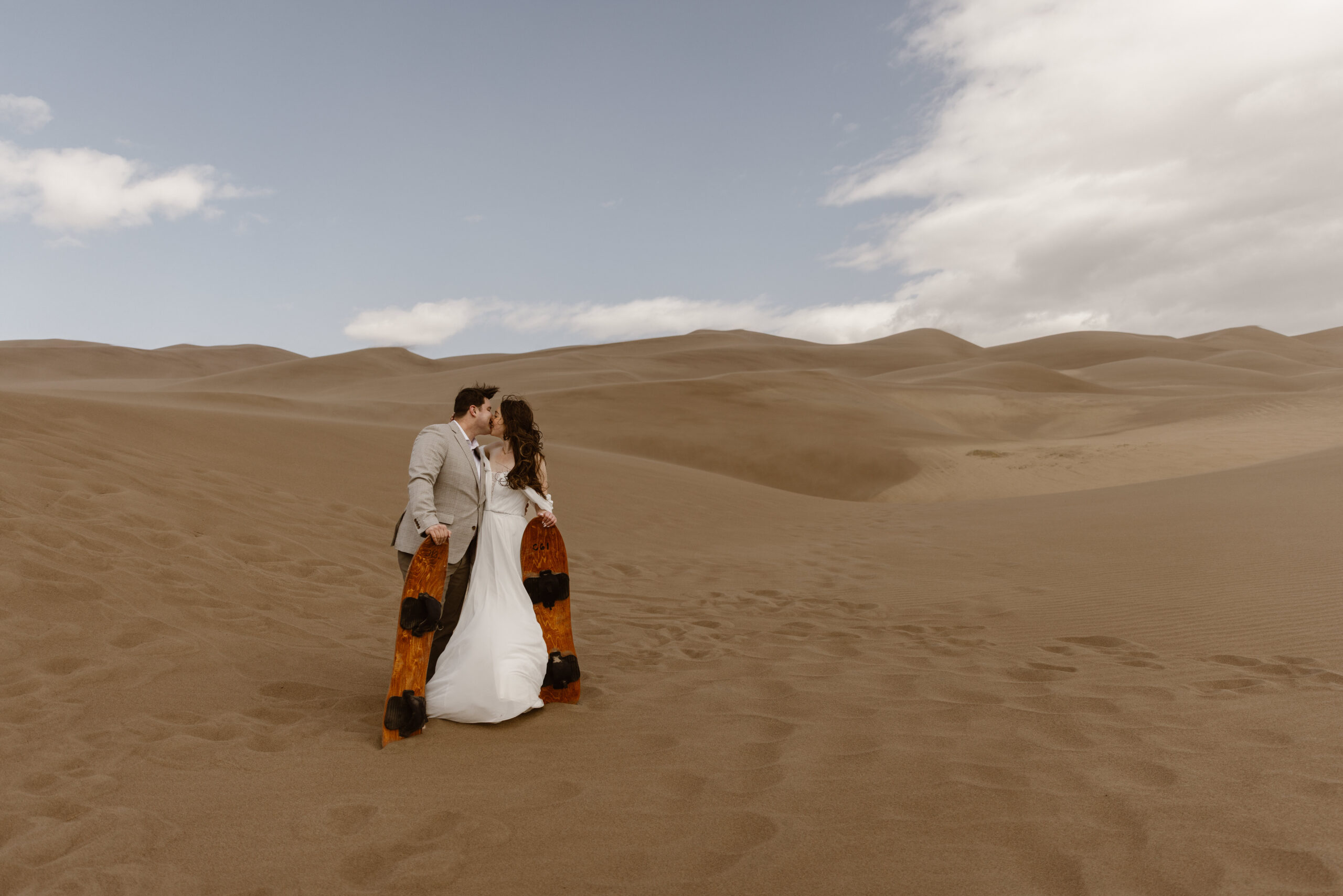
You can see the dunes from miles away on the drive in. Then you start walking, your feet sink into the sand, and you realize that the ridge you picked out is farther away than it looked.
If you’re thinking about eloping at Great Sand Dunes, that’s a useful introduction. The views are worth the effort, but the effort belongs in your plans.
I’m a Colorado native, and walking through this sand still feels like a workout. The base of the dunes sit at around 8,200 feet, nearly 3,000 feet higher than Denver, so it’s worth giving yourself time to catch your breath. I’ve visited in different seasons, felt the wind pick up, and found sand in my things months after heading home. On a calm day, though? I could spend hours out there.
Here’s what I’d want you to know before choosing this location for your elopement.
Why Choose a Great Sand Dunes Elopement?
The scale is what stays with me. The Sangre de Cristo Mountains rise behind the dunes, and each ridge gives you a different view of the sand stretching ahead.
You feel small out there. I love that.
If you dream about spending part of your wedding day exploring, taking your shoes off when conditions allow, and possibly sliding down a dune, this might be for you.
You don’t have to climb the tallest ridge to enjoy the landscape. We can build the day around how far you want to walk, who’s joining you, and how much time you want to spend outside.
The important part is choosing this place for the experience as much as the photos.
Best Time of Year for Eloping at Great Sand Dunes
Fall: My First Recommendation
Fall is where I’d start with most couples. I love the lower light, cooler walking conditions, and the chance to spend time on the sand without planning everything around summer heat.
September and October need different packing plans. Later dates can bring much colder mornings and evenings, so we’ll consider your comfort with cold alongside the look you want.
Fall usually brings mild days and chilly nights, but rain or snow can still move in. It’s my favorite season here because it isn’t as windy, and we’ll plan for chilly weather together. As we narrow down your date, I’ll help you understand the seasonal conditions, decide what to bring, and leave room in your timeline to adjust. As your day gets closer, we’ll watch the forecast and talk through any changes.
Late Spring: Medano Creek and Some Trade-Offs
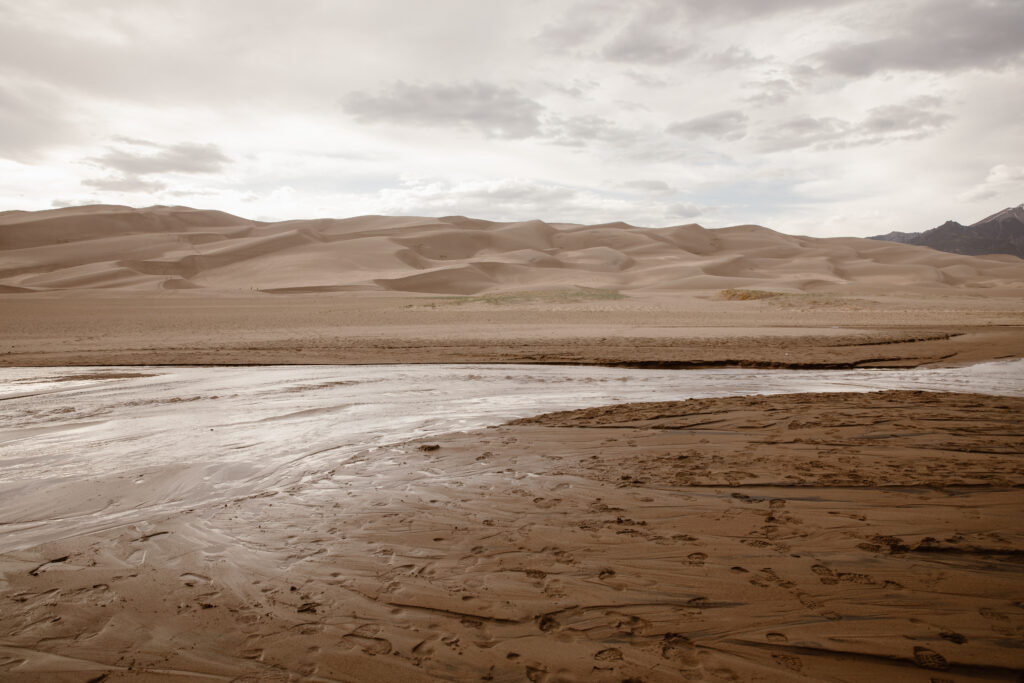
If you’ve seen photos of water flowing in front of the dunes, that’s Medano Creek.
Late May and early June usually offer the best chance to experience its peak flow. Snowpack makes a big difference, though. In dry years, the creek may never reach the main dunes parking area.
This is also a popular time to visit, especially on weekends. If the creek matters to you, we can consider a weekday, and I’ll help you plan around the NPS Medano Creek updates as your date gets closer.
Spring wind deserves a place in your decision, too. Blowing sand can make it difficult to keep your eyes open, let alone read your vows without eating your share of sand. We’ll leave room to adjust the timing if conditions call for it.
Summer: Plan Around Heat and Storms
Summer calls for an early start or an evening visit. The sand can reach 150°F on sunny afternoons, even when the air feels much cooler. I remember visiting in July, and I could feel the heat of the sand through my shoes!
July and August also bring afternoon thunderstorms. We’ll watch the park’s weather forecast together, and I’ll help us adjust our timing or leave the dunes if storms threaten.
If you know you don’t enjoy heat, summer probably wouldn’t be my first suggestion for you.
Sunrise or Sunset?
Sunrise is worth considering if a quieter start matters most. Arriving early can make parking and the walk out feel less rushed and there are generally fewer people at this time. We’ll account for getting ready in the dark and starting in cooler temperatures when we build your timeline.
Sunset is my personal favorite for photos here. I love how the late light brings out the ridges, shadows, and mountains. I’d build in enough time to walk, pause, and find our spot before that light arrives.
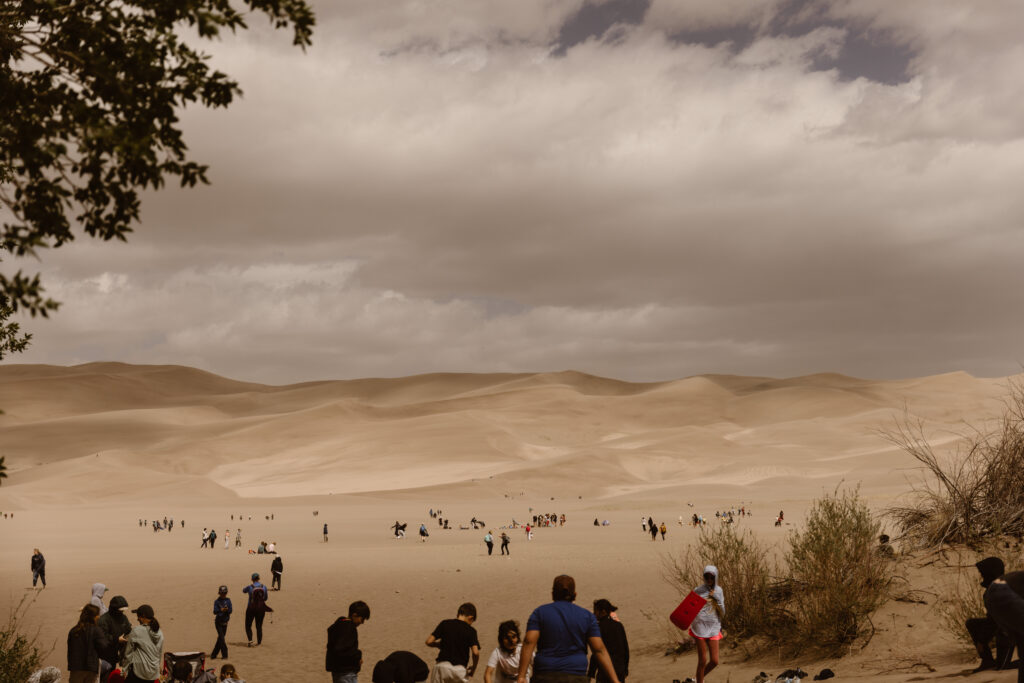
Neither option guarantees an empty landscape. We can choose our timing thoughtfully, but we’ll still share the park with other visitors. We’ll generally encounter more people closer to the parking lot.
For sunset plans, I’ll make sure headlamps and warm layers are on your packing list for the walk back.
Permits for Eloping at Great Sand Dunes
Every ceremony requires a Special Use Permit, including an elopement with just the two of you.
The park currently lists these requirements:
- Application fee: $200, nonrefundable, submitted with your application.
- Application window: Beginning January 1 of your ceremony year, with applications due at least seven days before the event.
- Dunefield group limit: 15 people total, including the couple, guests, officiant, and photographers.
- Ceremony length: Two hours maximum.
- Access: Your permit does not reserve a private area or cover entrance fees.
- Drones: The park does not allow them for weddings, including use by licensed pilots.
- Decorations: No scattering petals, rice, or other materials. Bouquets and boutonnieres are allowed; floral displays and other setups have restrictions.
Your wedding permit generally includes your photographer and officiant. I’ll confirm any additional requirements that apply to my services.
I’ll help you work through the Great Sand Dunes wedding permit requirements, including your location, guest count, and timing. We’ll leave time for questions before you submit your application, and I’ll remind you to bring the approved permit.
Real Talk: Give Yourselves Time to Enjoy It
Walking on the dunes takes more effort than the same distance on firm ground. Your feet sink, the sand shifts, and climbing adds up quickly.
My advice: choose a ceremony spot that leaves you enough energy to enjoy being there.
Tell me how you feel about walking in sand, whether anyone needs a gentler route, and what matters most to you. A shorter walk with time to stop may suit your day better than reaching a particular ridge.
And yes, sand gets everywhere. This is non-negotiable and unavoidable. Your shoes, your bag, your hair, and places you won’t discover until later.
If that makes you laugh, we’ll probably get along well out there. We can definitely build in time to clean up, too!
Being prepared gives you more room to relax. You don’t need to prove anything by staying out longer or climbing higher.
What to Wear for a Colorado Sand Dunes Elopement
Dresses: Think About Weight and Movement
Choose something you can walk, sit, and climb in comfortably.
I tend to recommend lighter fabrics and manageable trains here. Heavy skirts take more effort to carry, and detailed hems can trap sand. The whole construction matters, so try walking and lifting the skirt when you shop.
If you love a long train, it isn’t a hard no. Just plan for carrying it between photo spots, which you’d likely do at other outdoor locations, too.
For cooler dates, consider leggings under your dress and bring a warm jacket you’re happy to wear between photos.
Shoes: Start With Something You Can Walk In
Boots are my first choice for the walk out, preferably ones that cover your ankles. Comfortable closed-toe athletic shoes work, too.
Heels sink into the sand, and sandals leave your feet exposed while letting sand, rocks, and twigs collect between the sandal and your foot. The NPS dunes safety advice recommends boots or tennis shoes for hot sand and warns that sandals don’t offer enough protection. I’ll help you think through footwear for the season and the walk we’re planning.
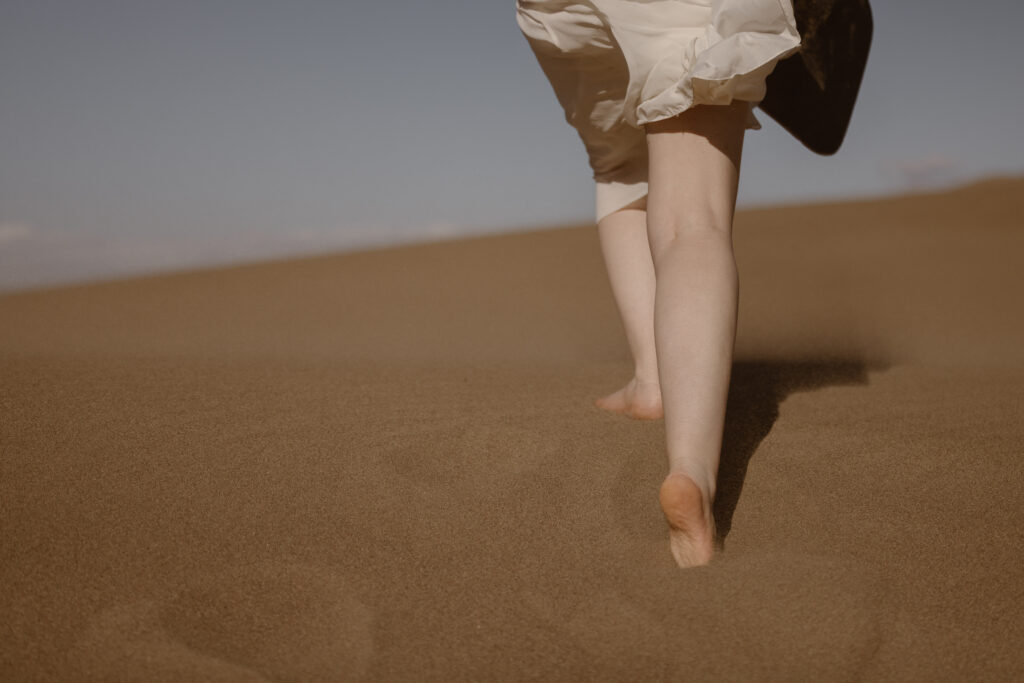
Barefoot photos can work, and are probably my preference here, when the sand is cool and the footing feels comfortable. Keep your shoes nearby and bring a bag to carry them.
Suits: Choose Your Level of Contrast
Navy, charcoal, and black are options I like if you want your outfit to stand out against the sand. Lighter neutrals create a softer look and can blend in with the sand background.
You don’t need to rule out a color you love. Think about whether you want contrast or a palette closer to the landscape, then prioritize a fit that lets you move.
And a practical detail: close-fitting underwear can help with comfort while walking. Sand will still find opportunities to get places… men, you know where I mean. It’s persistent.
Hair, Makeup, and Veils
As we plan, I’ll help you get a sense of how much time we’ll spend outside so you can share those details with your hair and makeup artist.
If loose hair blowing across your face would bother you, consider an updo or a secured style. You’ll still have some movement, but keeping your hair secured can make the wind easier to manage. Bring a few touch-up supplies for afterward.
A veil can be fun for photos, but I’d keep it packed until we’re ready and secure it carefully. Anything we bring onto the dunes needs to leave with us. That can mean running down a dune for your veil if it takes off.
Getting There and Choosing Where to Stay
Make the Drive Part of Your Plans
Coming from Denver, I enjoy the Highway 285 route for the scenery. I’d compare it with the I-25 route based on your starting point, road conditions, and comfort with mountain driving. But if the weather is nice, 285 gets my vote!
We’ll leave room for stops instead of planning to pull into the parking lot and immediately start your ceremony. I’ll also make sure we have a clear meeting plan you can save or download before you leave.
Stay Close Enough for the Day You Want
Before you book, I can help you compare the drive from your lodging options to the main dunes parking area. A listing described as “near Great Sand Dunes” may still involve a substantial drive.
The park’s lodging directory gives us a starting point, with options near the entrance and farther into the surrounding area. You don’t necessarily have to stay an hour away.
For camping inside the park, Piñon Flats Campground has tent and RV sites but no hookups. If camping sounds like you, we can look through its reservations and amenities to see how it fits your plans.
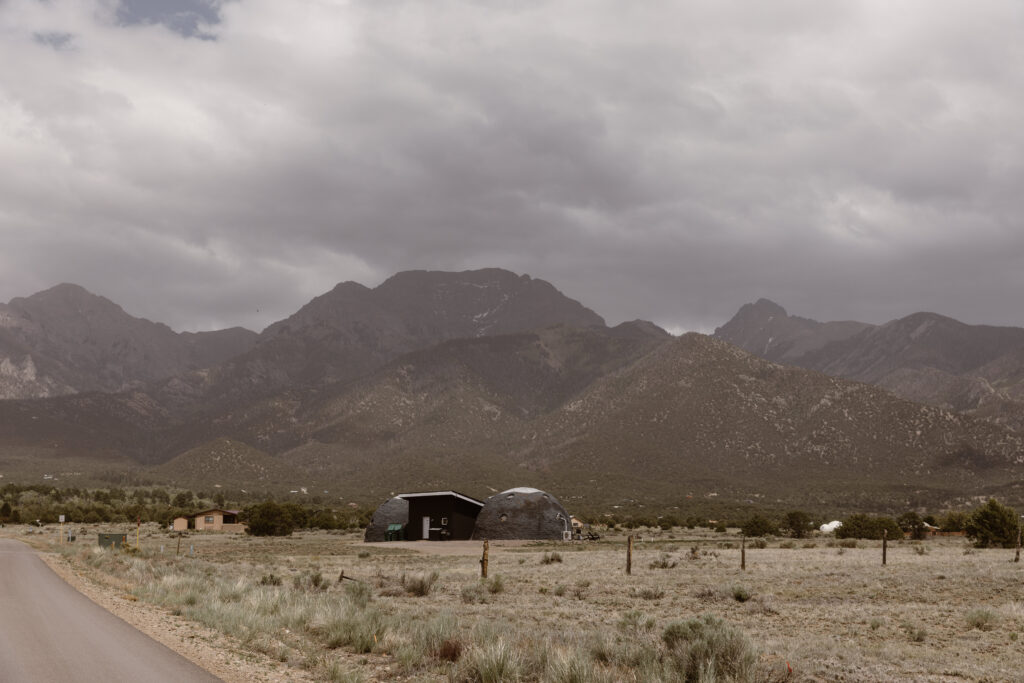
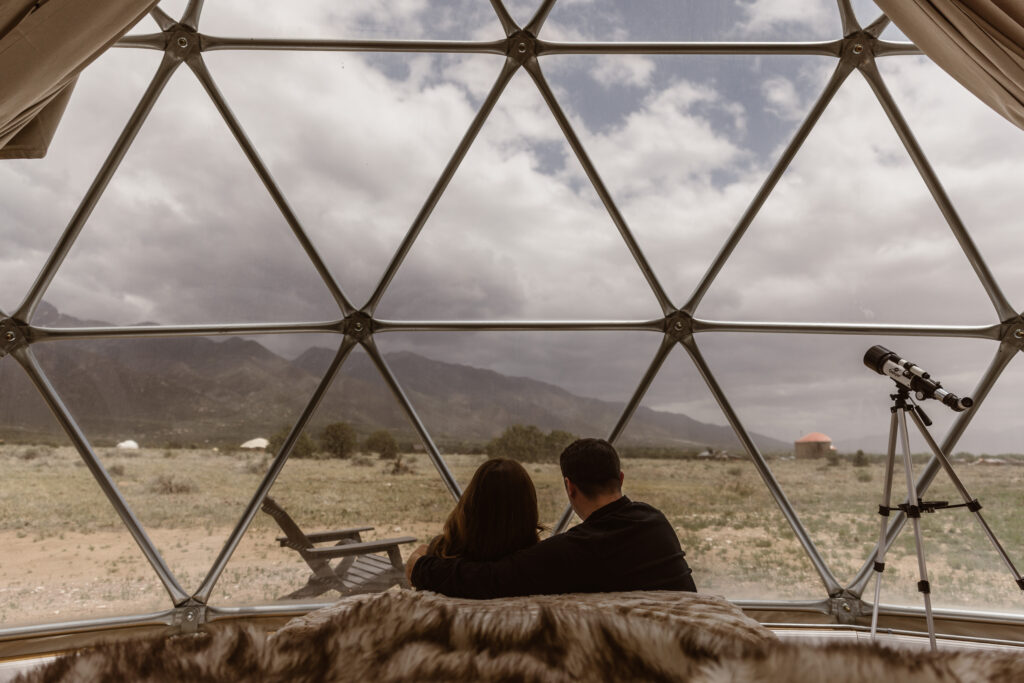
One place I’ve enjoyed is CrestDomes. The mountain views offer a different perspective from the park, and I found the hosts kind and responsive. The drive from here is about an hour to the dunes, so we’ll account for that in your timeline, especially if you’re considering sunrise.
Flowers That Can Handle the Day
I’ll help you think through how long we’ll be outside and what conditions to discuss with your florist. Ask for an arrangement that holds together well and feels comfortable to carry.
I wouldn’t automatically choose dried flowers over fresh ones. Some dried stems shed easily, which creates extra cleanup in the wind. Your florist can use our plans to help you choose sturdy materials for the conditions.
This could also be an opportunity to consider wood or artificial florals if you want an option that won’t wilt.
Want to Add Sandboarding?
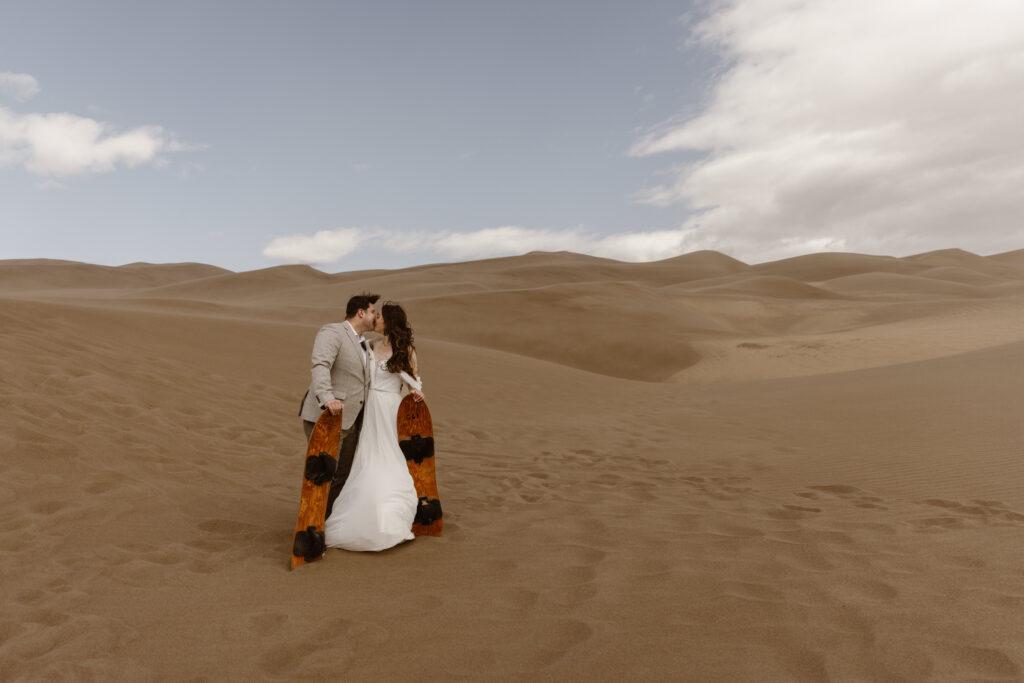
I will always recommend doing this here!
Sliding down a dune is one of my favorite experiences here. But it also means another climb or ten, so if this is something you want to do, we’ll plan enough time to enjoy it.
You’ll need a sandboard or sled designed for sand. The park doesn’t rent equipment; businesses outside it do. I’ll help you work pickup hours, return times, and weather restrictions into our plans. The NPS sandboarding guide lists rental options.
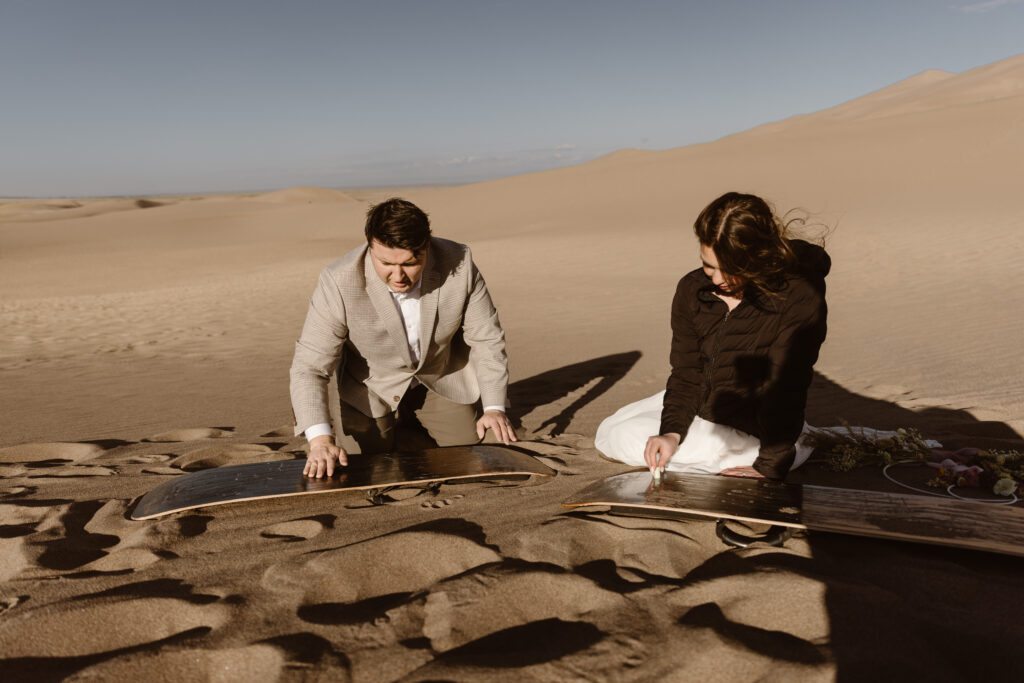
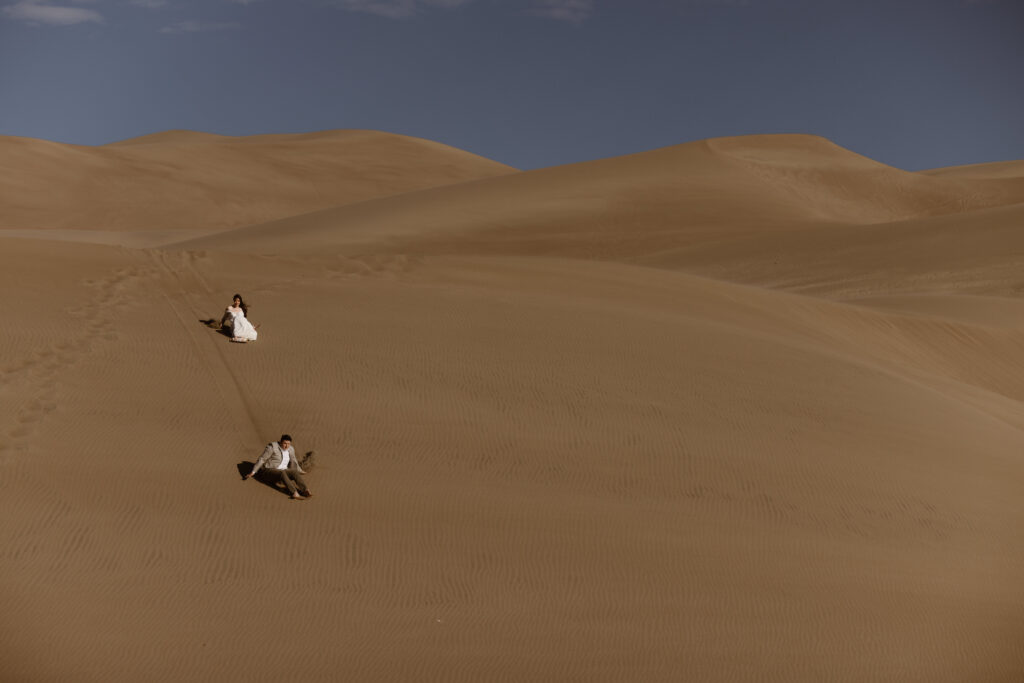
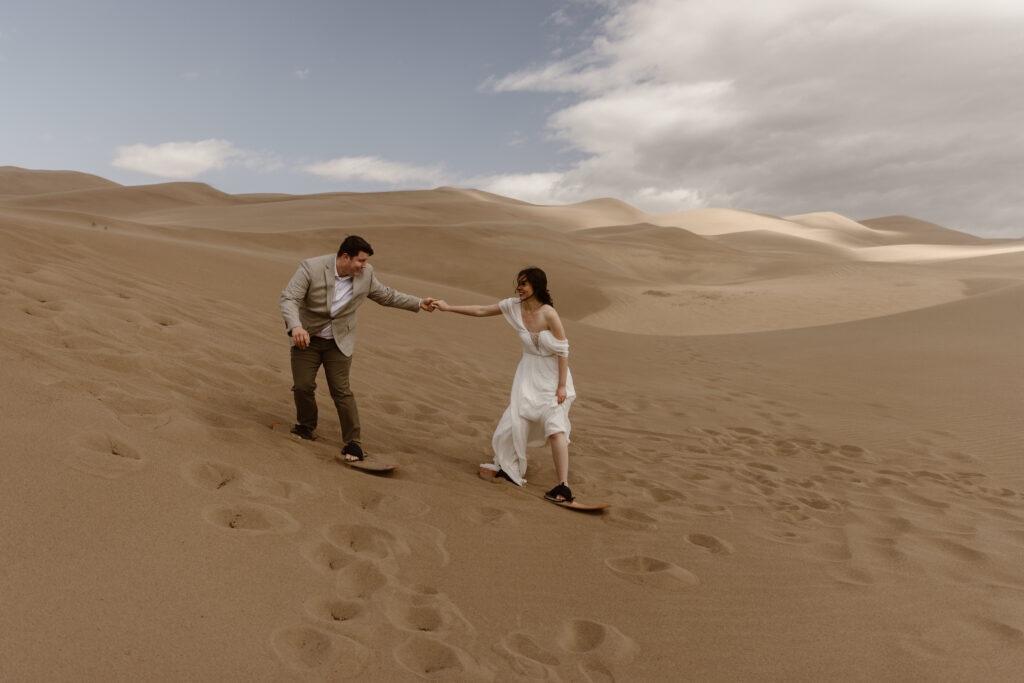
I’ve rented from Great Sand Dunes Oasis, and their boards were wonderful. They also gave us plenty of wax and recommended waxing the underside of the board before every run.
What to Pack
Keep your bag manageable, with room for:
- Water and snacks.
- Comfortable closed-toe shoes and spare socks.
- Warm layers.
- Sunglasses and sunscreen.
- Headlamps for any walking before sunrise or after sunset.
- A secure bag for shoes and loose accessories.
- A small towel and cleanup supplies for afterward.
- Your approved ceremony permit and saved planning details.
- Any rental equipment you’ve arranged.
Leave clean clothes in the car if you’re heading to dinner afterward. Future you will appreciate them. And know that the bag you bring out into the dunes will end up with sand in it for months.
What Happens if the Wind Picks Up?
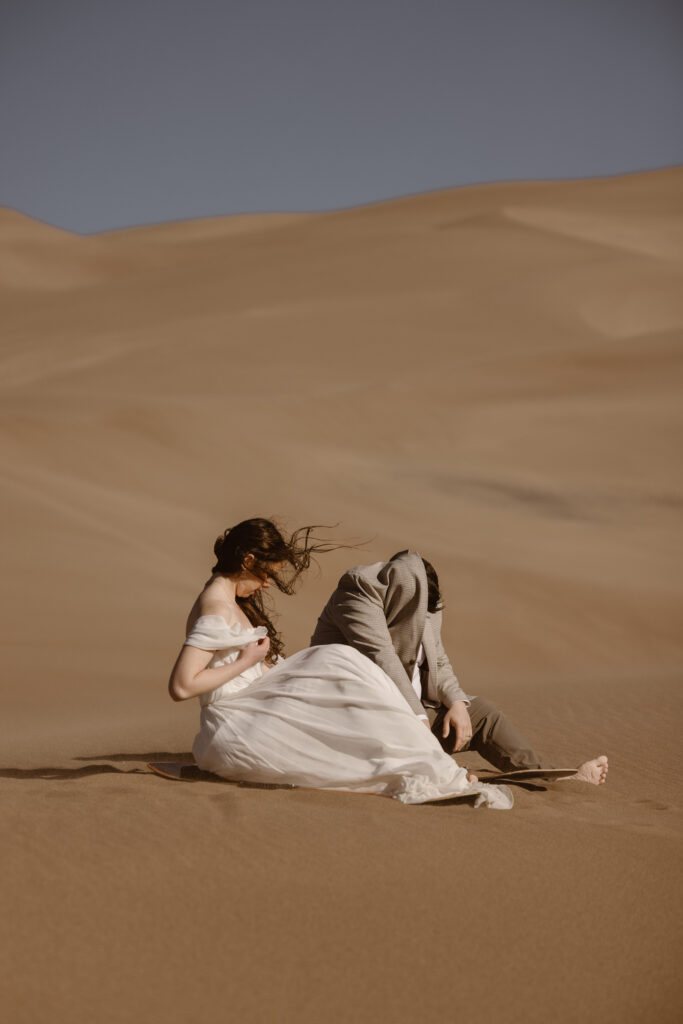
A little wind and a windstorm blowing sand that hurts your face are two different experiences.
We’ll talk through alternatives before your day: adjusting the timing, shortening our time outside, or using another plan if conditions require it. Any ceremony location change needs to fit your permit or receive park approval.
I’ve been out there in a windstorm, and it sucked. At first, it was a little sand here and there in the wind. Then the wind picked up, and it felt like the sand was pelting us.
We received a weather alert about the wind, and that was when we decided it was time to leave. But we still had a 20-minute walk back through the wind and sand.
That experience stays with me when I’m planning a day here. Deciding to leave doesn’t mean you’re immediately out of the conditions. I want us to leave room for the walk back and adjust before things get that uncomfortable, rather than wait for an alert.
I won’t ask you to push through uncomfortable or unsafe conditions for a photo. If conditions change, I’ll help us adjust with the walk back in mind.
Planning Your Great Sand Dunes Elopement Together
I keep coming back to the dunes because of how I feel standing out there. The scale still surprises me, even after multiple visits.
That firsthand experience also shapes how I plan: time for the walk, room for changing conditions, and enough flexibility to stop and enjoy where you are.
If you’re considering eloping at Great Sand Dunes, tell me what draws you here and what you’re unsure about. We can build a day around both.
Reach out through my contact page, and let’s work through the season, the logistics, and how you want to spend your time.