
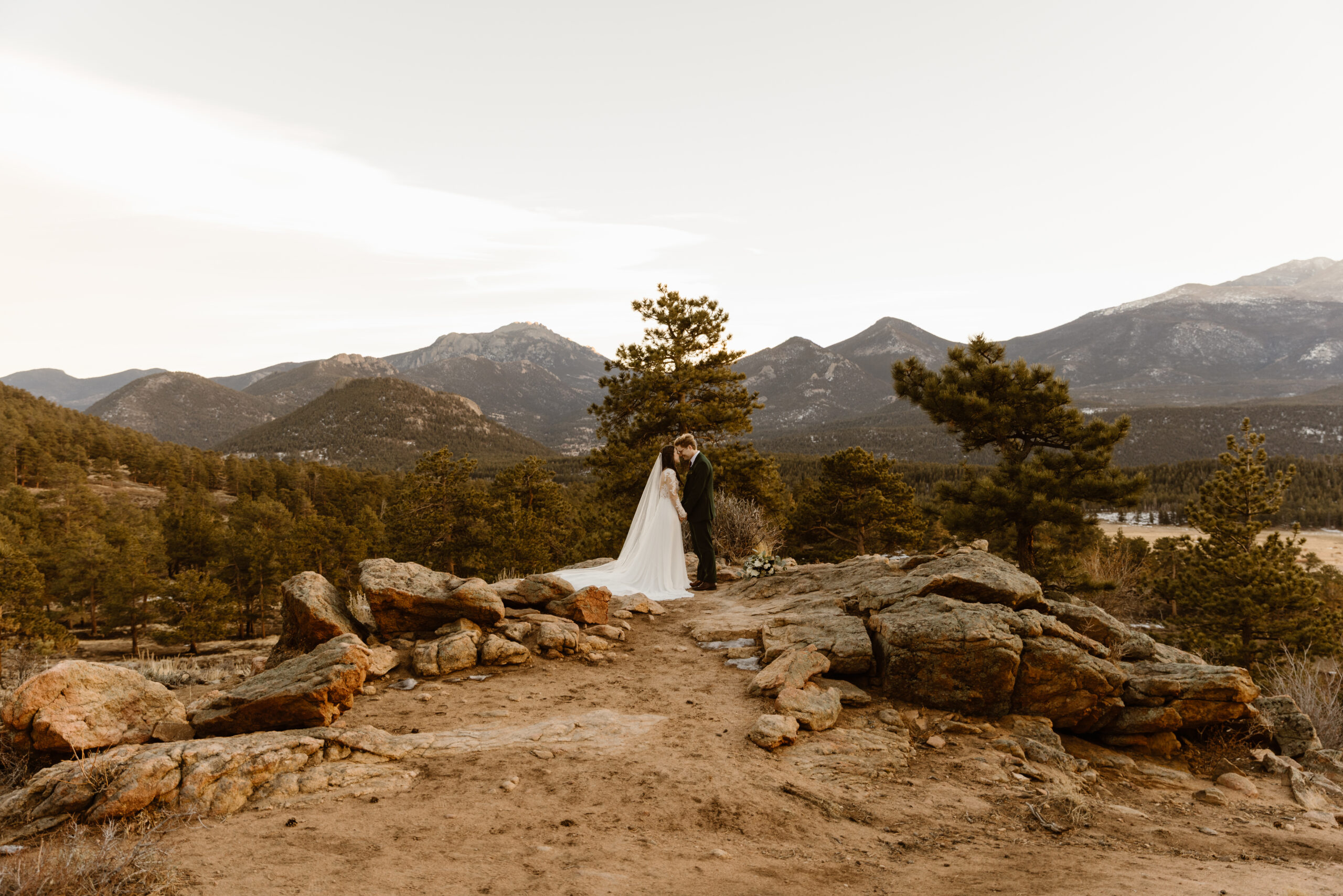
What to Know Before You Apply
Before you can finish your Rocky Mountain National Park wedding permit application, you need a date, a ceremony site, and a two-hour window. That sounds simple until you’re looking at the form thinking, “Wait, how do we know what time we want to get married when we haven’t planned the day yet?”
This is where I like to start with you. The location, the timing, and who you’re bringing all shape the application. Working through those decisions first makes the paperwork a whole lot easier.
If you’re just starting to figure this out, let’s walk through what you need, what deserves a little extra thought, and what I learned from contacting the permits office directly.
Availability changes. Before you apply, check the official RMNP weddings page for current openings, fees, and requirements. I’ve identified the guidance that came from my conversation with the office throughout this post.
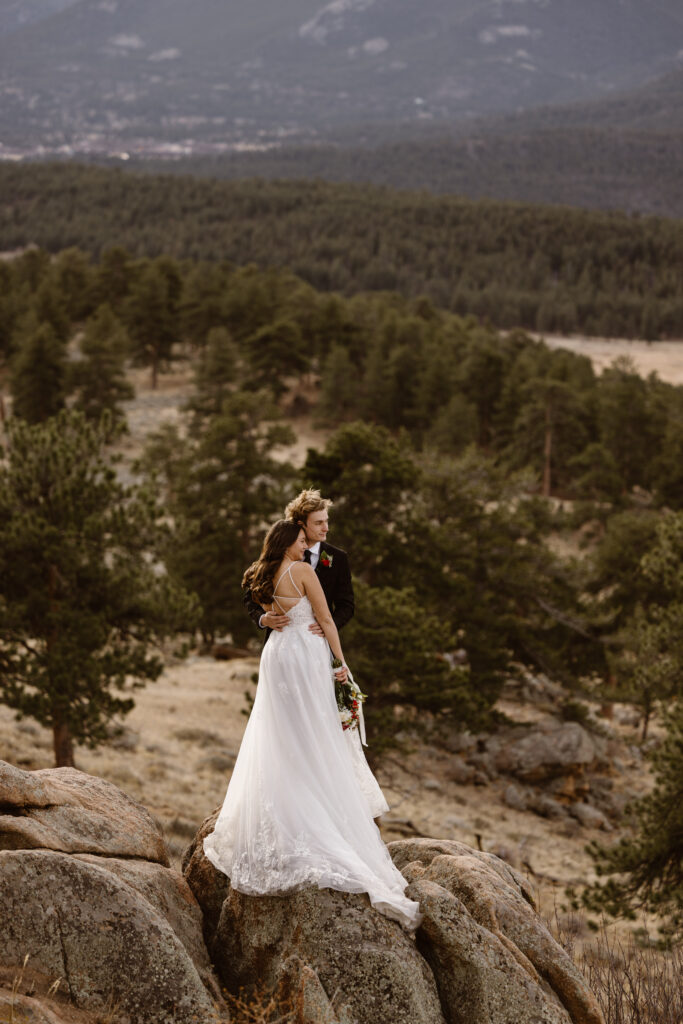
What the Rocky Mountain National Park wedding permit actually covers
You need a Special Use Permit when two or more people gather in the park for a wedding, elopement, vow renewal, or other ceremony. That includes exchanging rings, reading vows, and signing your marriage license. Keeping it small does not remove the permit requirement.
After your ceremony, you can take portraits elsewhere in the park where access is permitted, without an additional permit. Your ceremony itself still needs to happen at your approved ceremony site.
Your permit does not reserve the space exclusively for you. The park stays open to everyone, including the people walking the trail beside your ceremony location.
If you’re picturing complete privacy, let’s talk about that before you choose your site. We can consider foot traffic when planning, but we cannot promise you’ll have a public place to yourselves. Knowing that ahead of time gives you room to decide what feels comfortable.
What can you bring?
The park prohibits elaborate decorations, floral displays, tables, tents, and generators. Handheld bouquets and boutonnieres are allowed, and arches are allowed only at Moraine Park Discovery Center Amphitheater. A few chairs are allowed for guests who cannot stand through the ceremony.
If you’re thinking, “We just want to bring our people, say our vows, and spend time outside,” this may fit what you have in mind. You can keep things simple here. Just make sure the items you do want to bring fit the permit conditions.
When to apply for your Rocky Mountain National Park wedding permit
Applications open one calendar year before your desired ceremony month. For a September wedding, that means September 1 of the previous year. The park reviews applications on a first-come basis.
My advice: put that opening date on your calendar, then work backward. Give yourselves time to choose your site and think through your ceremony window before applications open.
The park limits ceremonies to:
- May through October: 60 per month.
- November through April: 40 per month.
- Each day: Six ceremonies across the park, with no more than two at any one designated site.
Check the park’s current availability before you get attached to a date. A site that fits your group still needs an available permit slot.
When I contacted the permits office, they told me they do not offer a cancellation waitlist. Based on that conversation, I would plan around an available month rather than build your day around hoping a spot opens.
Choosing among the 13 ceremony sites
RMNP has 13 designated ceremony sites. You need to name a specific site on your application, so this decision comes early.
I know it’s easy to start with the photos. You see a mountain backdrop and think, “That’s it. That’s where we want to be.” Before we settle on it, I want to make sure it works for the people coming with you and the season you’re planning for.
Start with these questions:
- How many people will be there? Count both of you, every guest, children, and anyone working at your ceremony.
- How many vehicles will you need? Each site has its own limit, and parking needs to be part of the plan.
- What season are you considering? Some sites have different summer and winter limits or seasonal restrictions.
- What do your guests need? Think about walking distance, mobility, and restroom access.
- How do you feel about other visitors nearby? Some sites see more foot traffic than others.
The largest sites allow 30 people, and the smallest allow 10. At some locations, a group that fits within the winter limit would be too large in summer. Check the rules for your specific site and season before you finish your guest list.
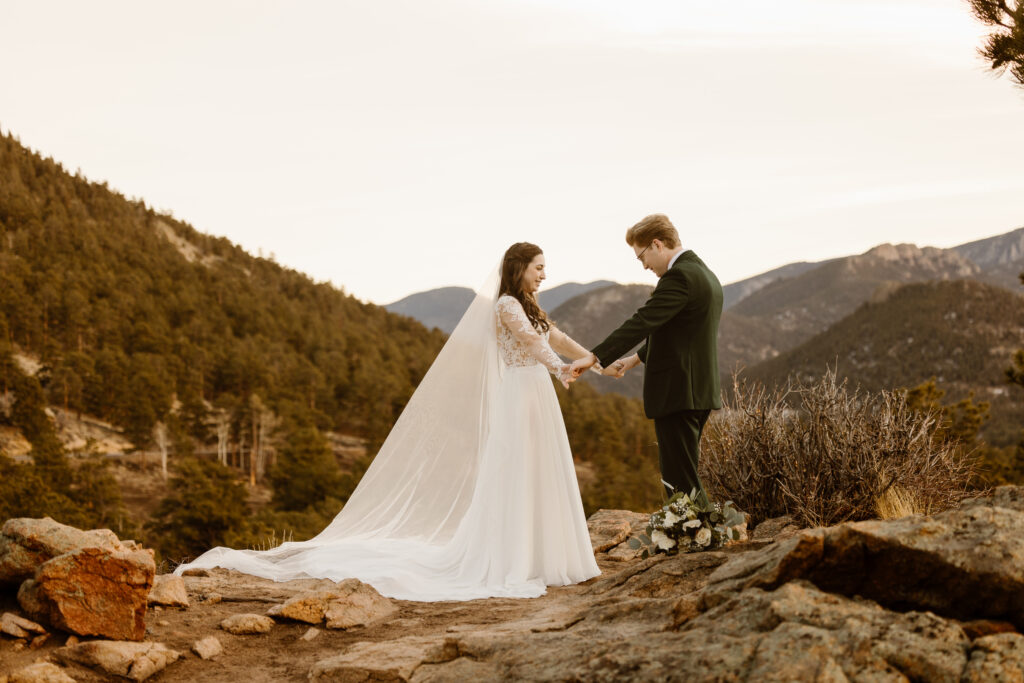
Each location links to its own page from the RMNP weddings page. Read through the pages for your first and second choices. The access details matter just as much as the view, especially when someone you love needs an easier walk.
You can also explore my Rocky Mountain National Park elopement blog and RMNP winter elopement gallery to see these places across different seasons.
Filling out your application
Once we know where your ceremony fits into the day, the application becomes much more straightforward.
Have these details ready:
If someone is still deciding whether they can come, account for them in your anticipated total. You want to choose a site that can accommodate the group you may actually bring.
Give your two-hour window some thought
That window includes arrival, setup, your ceremony, and photos at the ceremony site before you leave. It is easy to underestimate that time when you’re only thinking about how long your vows will take.
Picture the whole group arriving, getting everyone settled, and giving yourselves a minute to breathe. Those moments need room, too.
When I spoke with the permits office, they explained that they do not encourage changes once a permit is finalized. They said they can consider requests on a case-by-case basis, but a change is not guaranteed.
This is one reason I help you build the timeline before you submit. I want the time you request to make sense for how you actually want to spend your day.
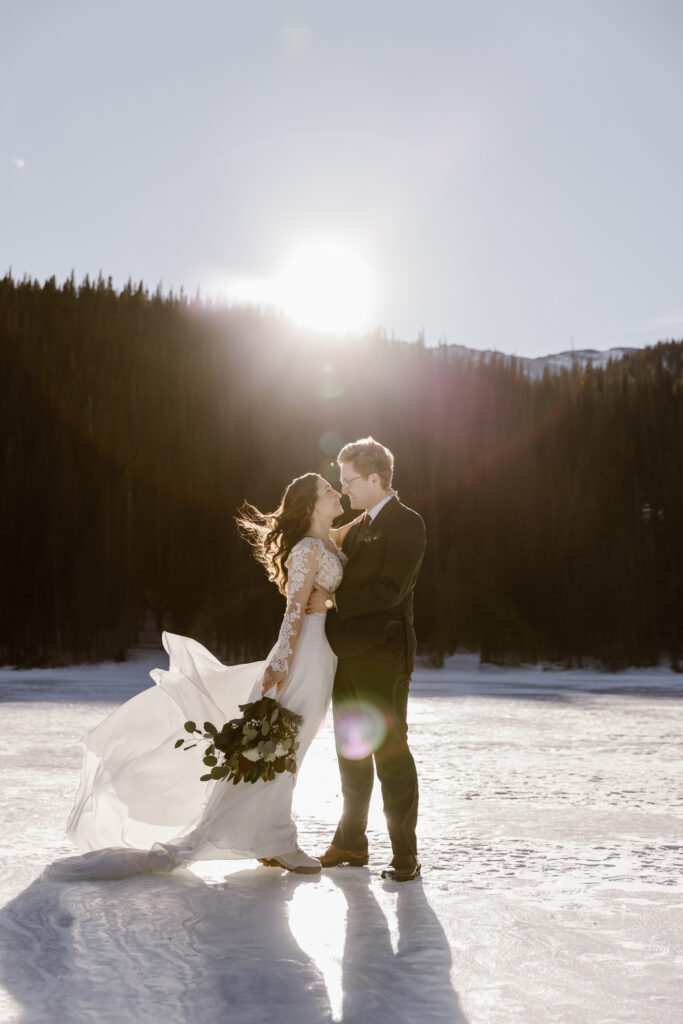
Wait for payment instructions
After the park reviews your application, they email a draft permit and payment instructions. Do not send the $300 non-refundable administrative fee with your application. Wait until the park tells you how to pay.
Once the process is complete, keep a printed or digital copy of your finalized permit with you on your ceremony day. Share it with everyone attending, including your photographer and officiant.
And yes, ask them to read it. It’s much easier to answer a question about what someone can bring while you’re still planning than when everyone has arrived.
Ask the office about your specific situation
When I emailed the permits office, I heard back within 24 hours. That was my experience, so I would not use it as a guaranteed response time, but I found them helpful and easy to work with.
If you have a question that the application does not answer, ask. You do not need to guess your way through something that affects your plans.
Real talk: plan for the park you’re getting married in
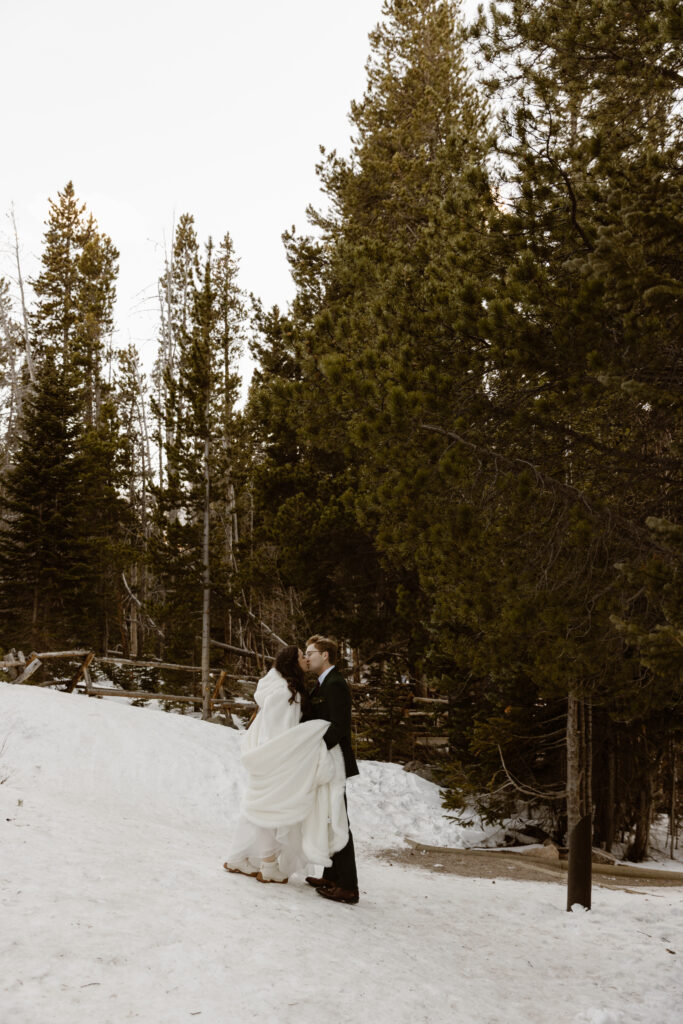
When I asked the permits office what couples most often wish they had known, their answer came back to the same thing: RMNP is a rustic outdoor experience.
You’re sharing the space with other visitors. Your ceremony site does not offer shelter from the weather. The park places limits on what you can bring.
If spending the day outside sounds like you, those details can be part of what makes this a good fit. You just want to plan for them before you’re standing there in your wedding clothes.
Think about what will help you feel comfortable: layers within reach, clear arrival instructions for your guests, a carpooling plan, and enough breathing room in your schedule. If you dream of a day that feels relaxed, these are the practical decisions that help you get there.
Entrance fees and timed entry
Normal entrance fees apply to every vehicle in your group. Include that information when you send guests their arrival details.
Your finalized, signed wedding permit serves as your Timed Entry Reservation. Keep it accessible when you enter the park.
Drones
Do not plan on drone coverage for your wedding. RMNP prohibits drones during weddings, including when the photographer holds an FAA license. Make sure anyone helping document your day knows that before you arrive.
Construction and location changes
Construction can affect ceremony sites, sometimes unexpectedly. The park does not offer refunds for construction impacts.
If your site is affected, contact the Commercial Services Office to discuss the option of changing locations, as outlined in the NPS wedding requirements. Another location is not guaranteed.
I recommend checking conditions as your date approaches and visiting your site beforehand if you can. If something looks different from what you expected, reach out to the office. Giving yourself time to ask questions is useful even when you cannot control the answer.
Questions You Might Still Have
Can we join a waitlist if our preferred month is full?
When I contacted the permits office, they told me they do not offer a cancellation waitlist. Based on that conversation, I recommend checking for an available month and planning around an opening you can apply for.
Can we change our two-hour window after the permit is finalized?
The permits office told me they discourage changes after finalizing a permit, though they can consider requests on a case-by-case basis. Contact the Commercial Services Office as soon as your plans shift. A request does not guarantee approval.
What if we’re concerned about unsafe weather?
Having a permit does not mean you need to proceed in unsafe conditions.
Contact the permits office about your specific situation and check current park conditions. Do not assume you can move your ceremony to another time or site on your own. This is something I want us thinking through while we plan, so you know who to contact if conditions change.
Do we need a separate Timed Entry Reservation?
No. Your finalized, signed wedding permit serves as your reservation for access covered by the permit. Normal entrance fees still apply to the vehicles in your group.
Can our photographer fly a drone?
No. RMNP prohibits drone use during weddings, even if your photographer holds an FAA license.
How do we make sure our application is complete?
Include your primary applicant information, ceremony plans and equipment, specific date and site, two-hour window, maximum anticipated headcount, estimated vehicle count, and completed signature section.
Before you send it, compare your group and vehicle totals with your chosen site’s limits. Then wait for the park’s instructions before paying the fee. A careful review now can save you another round of emails later.
How I help you put the day together
As your RMNP elopement photographer, I want your photos to bring you back to how your day felt. I also want you to feel comfortable with the plan before we get there.
That starts with talking about what you want to do, who you want beside you, and what pace feels right. If you know you don’t want to rush from one place to the next, tell me. We can build that into the day from the beginning.
Here’s where I help:
You do not need to have every answer before we start. We’ll work through the decisions in an order that makes sense, so you understand what you’re choosing and why it works for you.
Explore my RMNP elopement work to see what these days can look like. If you’re planning a Colorado elopement and want help with the location, permit, and timeline, get in touch here. We’ll start with what matters to you and build a plan you feel confident about.


